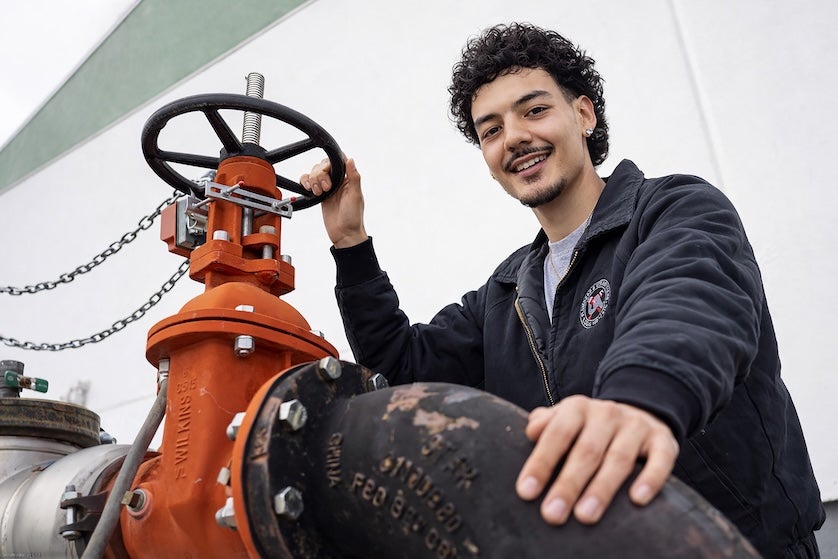
Michael Rada found his calling outside, hands deep in the soil. After struggling academically, he transferred to an independent study program during his senior year of high school. Encouraged by his counselor to explore careers at DVC, Rada discovered a horticulture class and his future passion.
“In that program, I found so many like-minded people. The learning environment I was exposed to invigorated me to learn,” says Rada.
Rada says that DVC made a significant impact, steering him to his career and a joy found in lifelong learning. “I used to hate science and school. Now it is a part of my daily life, and I love it.”
Rada completed foundational horticulture and general education courses at DVC before transferring to Humboldt State University (now Cal Poly Humbolt). He earned his bachelor of science in environmental science, with minors in botany, watershed science and geospatial science.
After working as a field biologist, Rada returned to the Bay Area and now manages an extensive plant palette at the Ruth Bancroft Garden in Walnut Creek. He is also back at DVC, pursuing the horticulture certificates he had started years before.
“This fall, I will complete certificates of achievement in plant science and horticulture, nursery and greenhouse, and arboriculture at DVC,” said Rada.
Sprouting a New Path
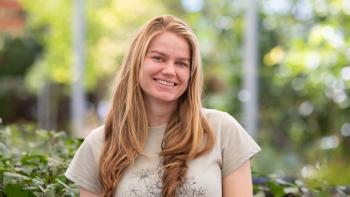
Anna Sturbaum credits DVC with twice providing an outstanding and affordable education. After high school, she began her college journey at DVC and then transferred to earn a bachelor’s degree and teaching credential. After four years of teaching, Sturbaum wanted a different path, inspired by a gardening project.
“I got a job building raised bed vegetable gardens. But before long, clients asked me questions I didn’t know the answers to. I felt like an imposter,” Sturbaum says.
Sturbaum returned to DVC and enrolled in the horticulture program, earning a certificate of achievement in plant science and horticulture, as well as certificates of accomplishment in nursery technician and horticulture technician.
“You want to learn about plant propagation? You will actively propagate hundreds of plants. Controlled environment growing to grow your own plants? You can help build aquaponics or hydroponics systems,” says Sturbaum.
The program’s connections led to competing job offers. Ultimately, she chose an ecological landscape installer opportunity at Mariposa Gardening and Design, where she applies her DVC training daily.
To those considering the program, Sturbaum shares her powerful endorsement. “You might end up finishing the program, walk at graduation, and acquire an awesome job and lifelong friends. That’s what happened to me.”
Seeds of Inspiration
Onna Young was drawn to the DVC horticulture program out of both necessity and entrepreneurial interest.
“I had moved to the area, and at the time I had a large yard with mature fruit trees. I wanted to know how to keep them alive,” says Young.
As a consultant with the Solano-Napa Small Business Development Center (SBDC), Young recognized the horticulture program’s strong potential for lucrative ventures.
“As a business advisor who helps future business owners take their infant idea and turn it into a fully-fledged sustainable business, what stood out to me was how every horticulture module taught could be turned into a thriving business,” Young says.
Young interned at the U.S. Department of Agriculture’s Wolfskill Orchard in Davis, California, where she maintained over 3,200 species of grapes and hundreds of species of stone fruits.
“To be able to experience the joy and pride of making hundreds of things come alive was a life experience I wish for everyone.”
Harvesting a High-Growth Future
Horticulture students who earn an associate in science degree or a certificate access many job opportunities throughout the Bay Area. Numerous companies and organizations have hired DVC horticulture students and alumni, including:
- Curious Flora Nursery
- Dark Heart Industries
- Devil Mountain Wholesale Nursery
- Gardens at Heather Farm
- Public Works for the cities of Martinez, Richmond and San Pablo
- Ruth Bancroft Gardens
For more information, visit Horticulture.
Bay Area Job Outlook
Opportunities in horticulture are typically available even during challenging economic periods as plant and landscaping care is always needed. Roles with the brightest outlook include landscaping and groundskeeping workers and nursery and greenhouse workers.
- Irrigation Worker: $44,150
- Landscaping and Groundskeeping Workers: $48,210
- Nursery & Greenhouse Workers: $44,150
- Buyers and Purchasing Agents, Farm Products: $93,320
Source: O*NET Online, U.S. Department of Labor
Laying the Groundwork for Growth
Dr. Lorenzo Washington recently joined DVC as Assistant Professor and Program Co-Coordinator of the Horticulture and Plant Sciences Program. He brings a unique blend of plant sciences research and urban agriculture experience to the program.
What do you think is most exciting and innovative about the DVC horticulture program?
The instructors and students are enthusiastic and innovative and have built a strong sense of community.
To have multiple greenhouses, shaded galleria, composting stations, and (soon) a dedicated garden space at a community college is impressive and impactful for the students.
Looking ahead, what directions would you like the horticulture program to explore?
We’ve been developing courses related to aquaponics, aeroponics and cannabis cultivation. We’ve also been incorporating mycology (the study of fungi and mushrooms) into the curriculum.
What do you see as your ultimate measure of success for your work at DVC?
If I can empower our communities to be well-prepared to work with and further develop the rapidly advancing technologies that are transforming how we grow food, medicine, and further innovate our relationships with plants – I’d consider that a career well-spent.